Newsletter
September 2, 2026
A few weeks ago, I tweeted, “I firmly believe that talent alone doesn’t mean it must be monetized. People feel unfulfilled because their skills aren’t generating income, even when they are making an impact in other meaningful ways. True fulfillment comes from how you use your gift, not how much it pays.”
That led to several discourses with people who, like me, are Gen Z: Black, LGBTQ+, women and men, all between the ages of 24 and 27 reflecting how deeply this question resonated within my community.
As a multidisciplinary artist, my work spans across different mediums, but at its core, it always comes back to storytelling. I have always approached my role as an artist with integrity, striving to remain true to myself. But before I even understood what being an artist meant, I was already living it.
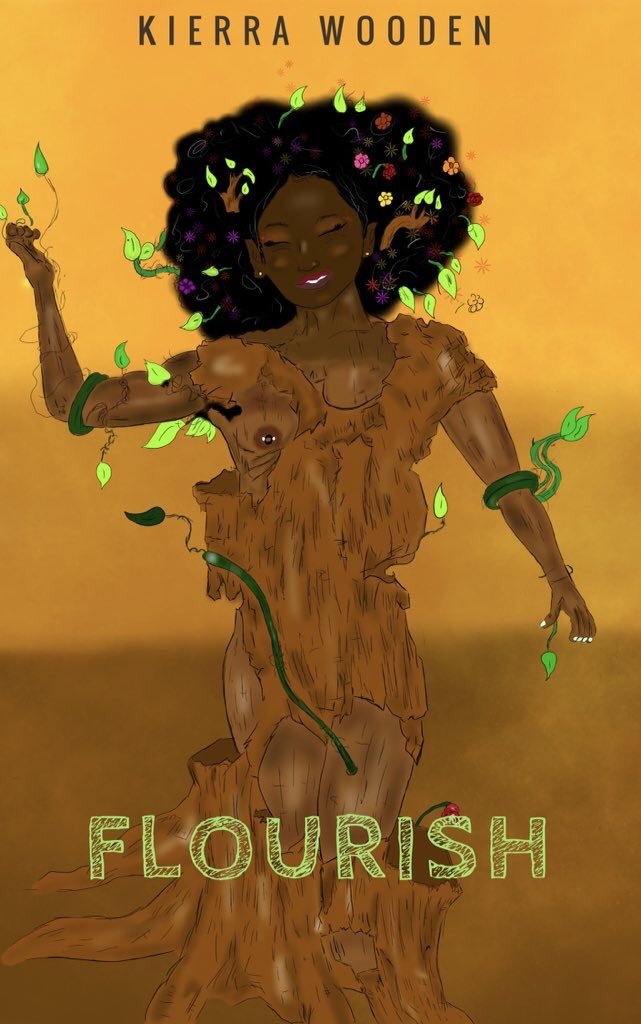
I am a 27-year-old Black woman from the South Side of Chicago, and it wasn’t until 2016 that I realized what I had been doing all along made me an artist. That year, I began sharing my poetry on social media platforms like Twitter and Tumblr. It was a whole new world. People connected with my words, supported me, and were genuinely inspired by my journey.
It felt incredible to create, to build a body of work that wasn’t rushed or forced. I self-published my first book in 2018, after beginning the writing process in 2016. There was no pressure to constantly shift focus or push out content just to keep people engaged. Readers anticipated my book because they truly cared, and that feeling was magical. But now, the 2010s feel like a lifetime ago. The way people consume art has drastically changed. We are feeding a different monster: the algorithm. If I want my work to even reach the people who follow me, I have to either pay or mass-post just to appear on their Instagram or Twitter feeds.
"We, both as creators and consumers, are battling something much bigger than ourselves."
It wasn’t always like this. In the early days, when I shared my poetry, I never worried about timing my posts for engagement, crafting ‘relatable’ captions, or competing with the endless scroll. But now, there’s this underlying pressure, if I don’t post, I’m forgotten. If I don’t monetize, I’m ‘wasting’ my talent. If I don’t play the game, I lose visibility. It’s frustrating because art isn’t meant to be a constant stream of output. It requires time, space, and stillness to grow. And yet, in an algorithm-driven world, taking that time can feel like a risk.
Sometimes, my work manages to break through the algorithm; other times, it disappears into the void. But I don’t care. Remaining true to myself and my craft matters more. The impact of the algorithm on people’s attention spans and creative processes is undeniable. We, both as creators and consumers, are battling something much bigger than ourselves.
I’ve monetized my work and experienced highs and lows. Being able to pay my bills, pay off debt, and afford things I enjoy through my art has, in some ways, made me believe that maintaining visibility, relevancy, and significance as an artist depends on monetization. But as I leaned into making money from my craft, I began to feel disconnected from my true passion. It no longer felt like I was creating from a place of authenticity.
Just because someone likes my work and wants to collaborate doesn’t mean we align. Just because people want me to constantly produce for their attention spans doesn’t mean I have to. Yet, when I needed the money, I took on projects that drained my creativity and killed my joy, my artistry. Burnt out, I would go on months long hiatuses, stepping away from my work entirely.
In 2023 I made a decision: I will not do that to myself again. I will create the things I truly want to create and only accept commissioned work from those who align with my artistic authenticity.
“I’m protective of my energy which leads me away from social media.”
I spoke with five of my friends I’ve met along my creative journeys in Chicago. Artists whose paths have intersected with mine. Jordyn Belli and Jonathan Burns, both photographers; Brooklynn Skye, a musician; Tori McHugh, a painter and SONNY, a rapper. I asked them:
- What sacrifices have you made as an artist?
- How has social media impacted your sacrifice?
- What steps are you taking to stay true to your passion?
Each of their responses gave me new perspectives, fresh inspiration, and a renewed sense of purpose. Their words reignited the fire within me. The drive to fight for the respect, value, and livelihood of artists who choose to stay true to their craft, even in a society that often pressures them to compromise.
Their stories revealed something I’ve felt myself. Art has become a balancing act between authenticity and visibility.
“When I started out, social media wasn’t dominated by influencers, and I enjoyed sharing my work. But as influencer culture grew, the pressure to market myself took away from the art itself,” Jordyn reflected. The constant demands, performative posting, and endless scrolling to nowhere left me drained. I realized I was being taken advantage of while I gave myself and work away to anyone who asked, in the name of being “nice” or “easy to work with.”
“I’m protective of my energy which leads me away from social media.” Tori expressed.
“I’ve adopted a more laissez faire relationship with my art; seeking to do it only out of enjoyment rather for monetary pursuits, due to the stress, and lack of joy seeking payments constantly brought me.” Jonathan explained.
Reading their response reinforced a truth I’ve long felt. Monetization often comes at the cost of artistic freedom. Whether it’s the pressure to stay visible, the emotional toll of constant self-promotion, or the need to protect one’s creative energy, the struggle remains the same. But what happened to those who refuse to play by these rules?
"We were never meant to create solely for consumption."
Jordyn is one of my friends who has completely diverged from societal pressures.
“After moving to Michigan in late 2024 for a quieter life, I deleted all traces of my work online and erased my social media for good. I look back fondly on plenty of shoots and travels during the height of my photo career, but the sacrifices to my time, self-respect, and sanity were too much. I still love photography, but now I do it for my own enjoyment. Without social media, most of my work stays private, focusing on nature, my cats, home, and friends. Occasionally now I will print off photos and mail them out. I’ve had the opportunity now to learn other art forms, and explore new outlets to create. I read a lot more. I get outside more. I feel at this point, social media was perhaps never in the cards for me or my work. Not everything needs to be seen by strangers online who don’t care if you live or die. We were never meant to create solely for consumption.”

Jordyn was willing to give up what so many aspire for, in order to stay true to himself and to create from a place of integrity. I admire that choice because it’s a response to an impending problem. The idea that artists must conform to survive. But we don’t have to.
Jordyn’s story represents one extreme, but not every artist believes they can or want to leave social media behind. Others seek balance, using it as a tool rather than allowing it to dictate their work. With platforms like TikTok reshaping creative industries, many artists have transformed their lifestyles and even their socioeconomic class. I don’t blame them for choosing survival. The “starving artist” trope has destroyed lives, leaving many without community or financial stability. The rising cost of living, a volatile job market, and the lack of funding in the arts have all redefined what it means to be an artist today. In a world that demands monetization, the question remains: can artists truly create for themselves, or has survival become the ultimate compromise?
“When I didn’t have the bread, I made the work I’m most proud of.”
In a conversation with rapper SONNY, he told me, “When I didn’t have the bread, I made the work I’m most proud of.” He recalled being 17, working a job where every paycheck went toward producing his music and videos. A hunger that fueled his dedication to sharing his talent with the world. SONNY eventually went viral on TikTok, a moment that opened doors to new opportunities. Yet, what I respect most about him is his commitment to creating meaningful bodies of work. He leveraged his moment without compromising his artistry, staying true to his vision despite the pressures of the industry.
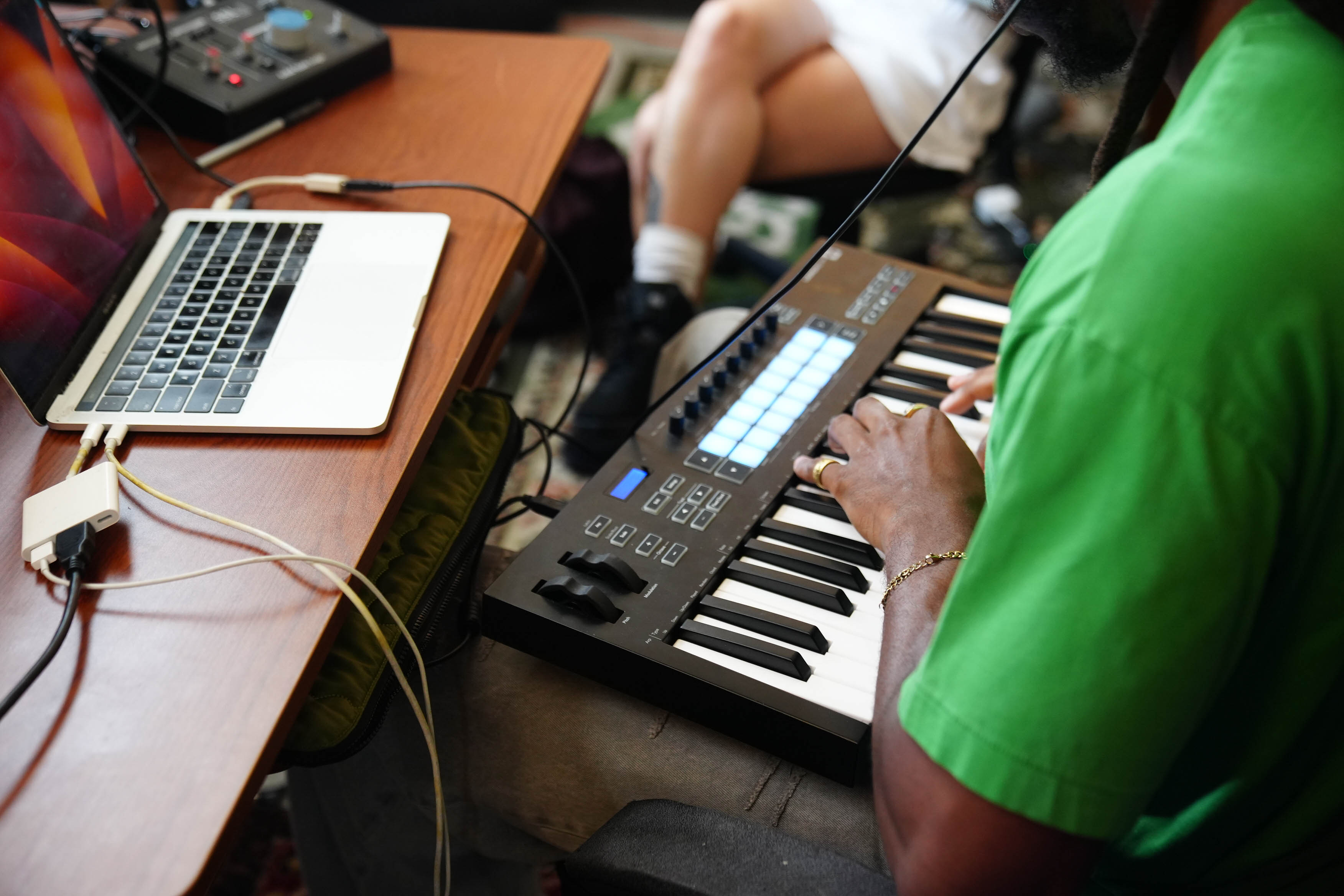
Brooklynn Skye, a musician whose artistry is her full-time job, shared, “To not have a normal day to day, or real consistency.” For her, that unpredictability is both a challenge and a privilege. She expressed how having the flexibility and freedom to focus entirely on her craft allows her to create without constraints, yet the instability that comes with it forces her to constantly adapt. Unlike traditional career paths with structured income and security, Brooklynn has learned to adapt to inconsistency, setting herself up to handle challenges when they arise. Whether that means streaming revenue, live performances, or commissions. Despite the uncertainty, Brooklynn embraces the trade-off, valuing the ability to fully immerse herself in her art over the predictability of a 9 to 5.
Brooklynn's experience highlights the duality every artist faces: the unpredictability of the artist's life and the freedom it brings, versus the constant adaptation required to survive. It’s a delicate balance that many, like Brooklynn, are willing to navigate for the sake of their craft.
"Our generation is redefining what it means to be a creative."
As artists, we are constantly confronted with this question: Can we truly create for ourselves in a world that demands monetization, or must we sacrifice parts of our passion to survive? In the end, it is the choices we make, and the boundaries we set, that define how we sustain our art, and ourselves.
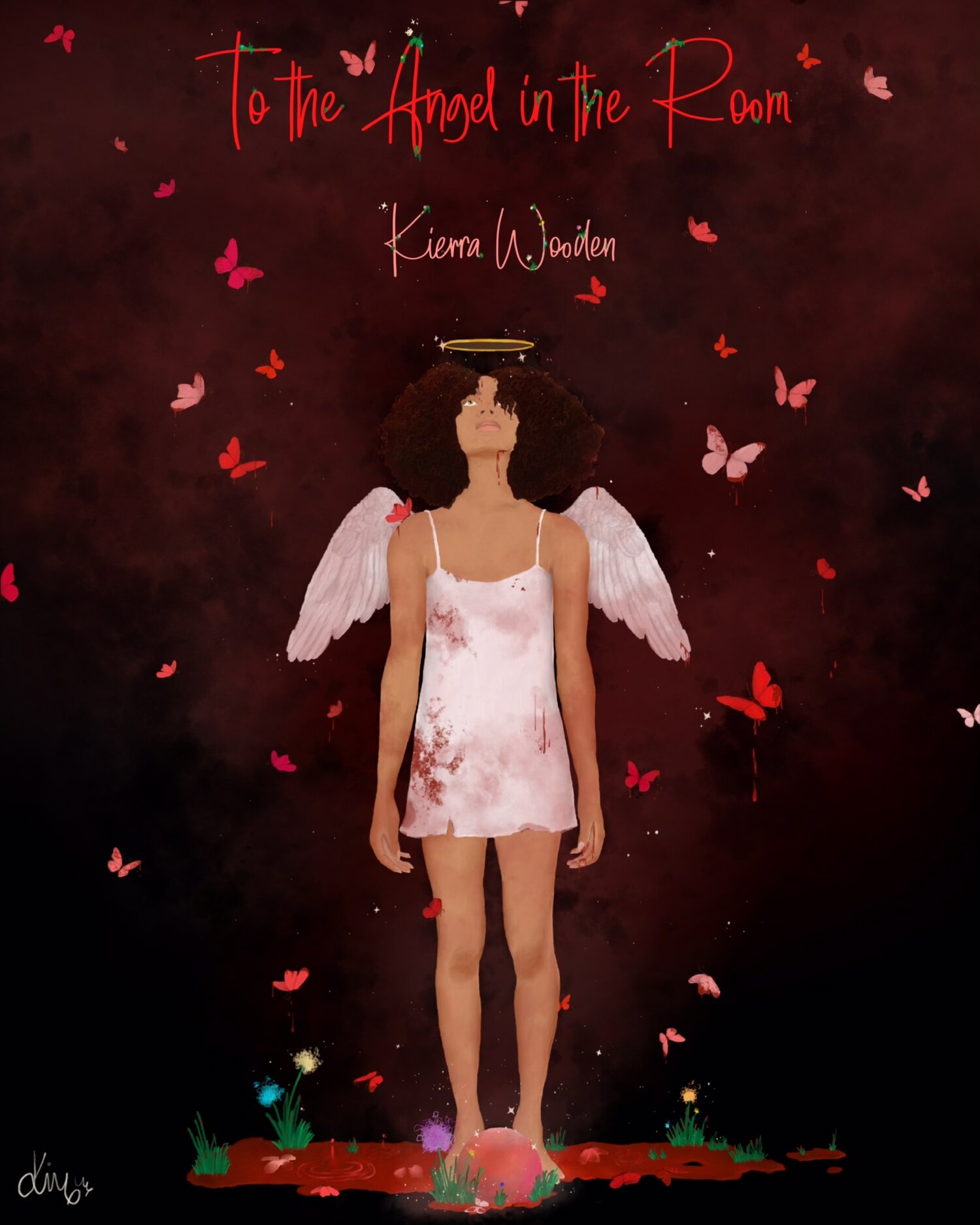
As a Gen Z artist, I know my path won’t look like those who came before me. Our generation is redefining what it means to be a creative. Not just in how we share our work, but in how we value it. We are rejecting the idea that art only matters if it trends. We are carving out spaces beyond platforms that demand constant output. We are redefining success, learning that sometimes, the most radical act is to step away from the algorithm entirely. As we navigate the modern art world, the question lingers: What will we sacrifice to create?"
Whether it’s freedom to create authentically or the pursuit of financial survival, each artist’s journey is shaped by their personal values and their relationship with their craft. The stories of Jordyn, Jonathan, Tori, SONNY and Brooklynn Skye underscore the tensions between authenticity and the demands of a monetized world.
But in the end, the true sacrifice is not just about what we give up in the pursuit of art. It’s about the choices we make in how we live, how we create, and how we define our worth. For some, this means rejecting the status quo and reclaiming the art for themselves. For others, it’s about finding a balance between the pressures of visibility and preservation of passion. For me, it’s about following my heart and doing what feels most authentic, regardless of what that might look like or how it manifests in reality. My art is an extension of me, and though it’s meant to be seen, it’s not a spectacle.
"What will the artist sacrifice to create?"
As we continue to ask ourselves what we are willing to sacrifice for our craft, let us remember that the choice is ultimately ours to make. What will the artist sacrifice to create? A question, a thought that has been passed down from generations, a passing of the torch. I ask myself this question every single day, how the fire of passion engulfs my heart because I know my purpose so clearly, and I’ll do whatever it takes to feed this fire.
Yet, the question of survival threatens to extinguish it. Sacrifice should be our choice to make. Yet, for generations, that choice has been made for us. In today’s society, many artists are forced to sacrifice genuine expression for survival and financial gain.
It’s a challenge that previous generations simply did not face. They may have also had to navigate an uncertain job market, rising living costs, and mounting debts, but they did not have platforms like Tik Tok as a lifeline.
For some, a single viral post has led to financial breakthroughs, paying off debts and securing opportunities that traditional pathways no longer guarantee. The allure of monetizing content is undeniable, when posting online can become a full-time income, the traditional job market fades into the background.
The danger we face? A generation of artists creating simply for the sake of making money over pure passion.
What will the state of culture be then?
Raise Your Voice
Are you a young creator between the ages of 18 and 26? Are you looking for a new way to display your talent? If you want more people / brands / corporations to see the world through your lens, reach out.